


Know If Progress Monitoring Interventions Are Working—in Half the Time
Our progress monitoring tools enable educators to measure students’ rate of improvement and determine if instruction and interventions are truly working six weeks earlier than traditional methods.



Calculate a student’s projected score using only six data points. While other progress monitoring tools require 12 data points, our patent-pending FAST Projection line can deliver actionable insight in 6-12 weeks.

Based on ground-breaking research on conditional probability from the University of Minnesota.

Get predictions faster.
Compared with the 12 data points most solutions require, our progress monitoring tool gives a prediction of future student performance in just six data points, saving valuable weeks (or months) of testing.

Intervene smarter.
Know when an intervention is working and when it needs to be changed.

Keep students on track.
Seeing an accurate prediction of future growth helps teachers ensure students are performing to their full potential and reaching their goals.

There are two approaches to progress monitoring—Curriculum-Based Measurement (CBM) and Computer Adaptive Tests (CAT)—but only CBM is proven effective. That’s why our approach relies on CBM to offer robust and reliable data needed to monitor students’ progress and provide the right support for academic goals.
Our progress monitoring measures are:
- Brief (1-4 minutes) and won’t take away from valuable instruction
- Simple and easy to interpret and apply
- Sensitive to growth to show the effects of interventions over short periods
- Valid, assessing only the specific skill areas that match students’ needs
- Reliable and highly predictive of future outcomes

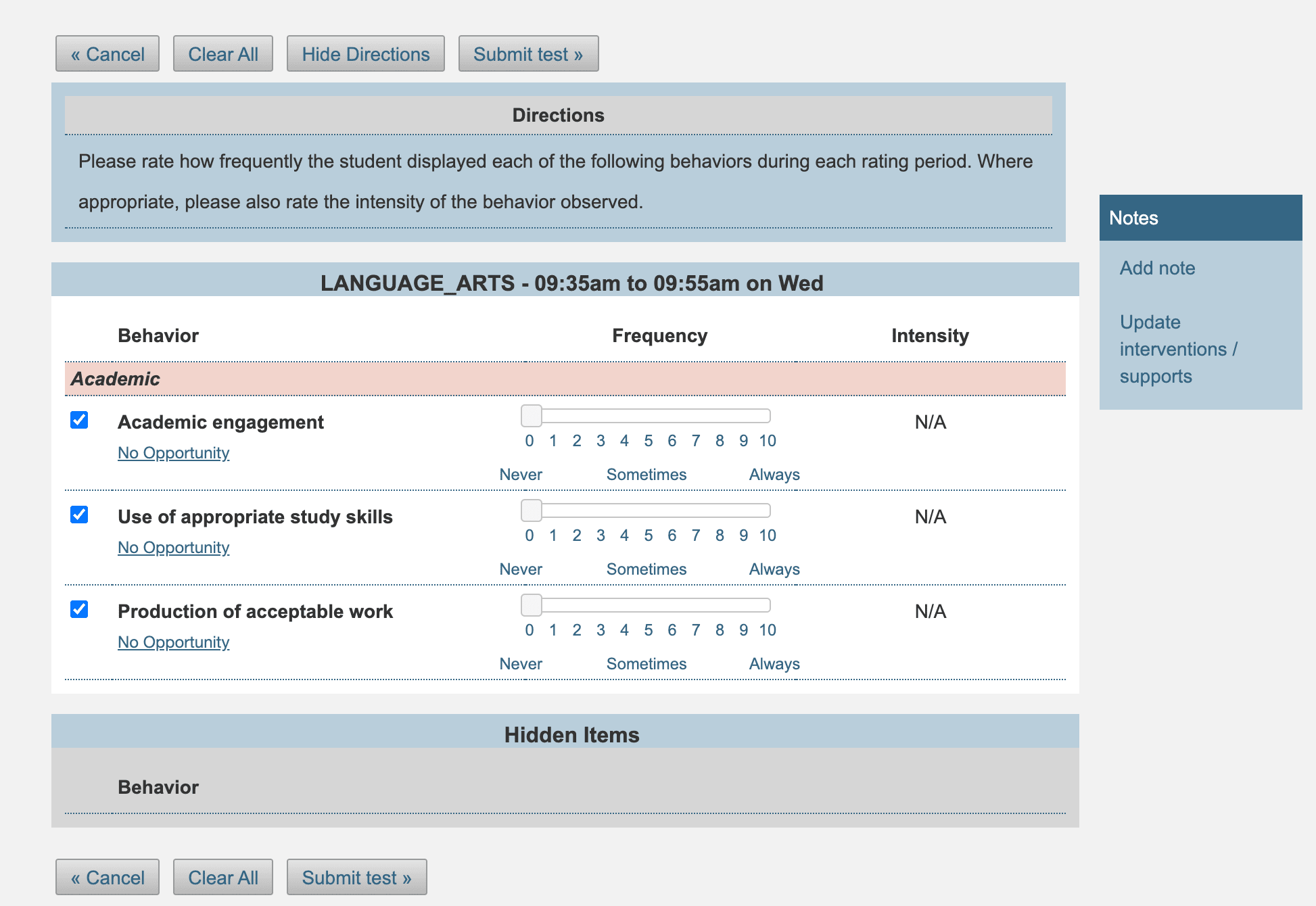
Research shows that success in school is influenced not only by academic skills, but also social-emotional behavior (SEB). Plan interventions that nurture the whole child by combining behavior progress monitoring tools with academic progress monitoring. See how our behavior progress monitoring tool, Direct Behavior Rating (DBR), supports social-emotional behavior functioning.

Data provided from universal screening can underscore systemic problems. Use FastBridge reports to make the decision-making process more intuitive and light.
Learn more about our progress monitoring reports.


eBook

Progress Monitoring 101
Review progress monitoring best practices and learn procedures for progress monitoring and tips for interpreting progress monitoring data.
Toolkit

Progress Monitoring Toolkit
Download our progress monitoring toolkit for data analysis questions (with recommended action steps) and to increase your team’s confidence in determining whether to continue, change, or fade interventions in order to close learning gaps faster.
Webinar

Progress Monitoring: Our Educational GPS
MTSS expert Dr. Dawn Miller from the SWIFT Education Center at the University of Kansas shares how districts across the country have implemented progress monitoring within a MTSS and the importance of being able to articulate and discuss key issues with colleagues and stakeholders.
