


Reading Assessment: The Key to Science-Based Reading Instruction
Reading Assessments are a critical component to ensure equitable, evidence-based literacy instruction. Our reading measures provide quick, reliable insights into student literacy that accelerate student growth.



Reading experts and cognitive scientists agree on five core principles of instruction that help all students learn to read—including those with reading difficulties like dyslexia.
Our diagnostic reading assessments help teachers pinpoint the specific reading skills that students are struggling with so that they can target interventions to the five components of effective reading instruction.
Phonemic Awareness
Ability to identify language sounds

Phonics
Ability to connect speech sounds to letters and make them accessible by sight

Fluency
Ability to read text

Vocabulary
Ability to build, store, and retrieve words and background knowledge

Comprehension
Ability to deduct meaning from text


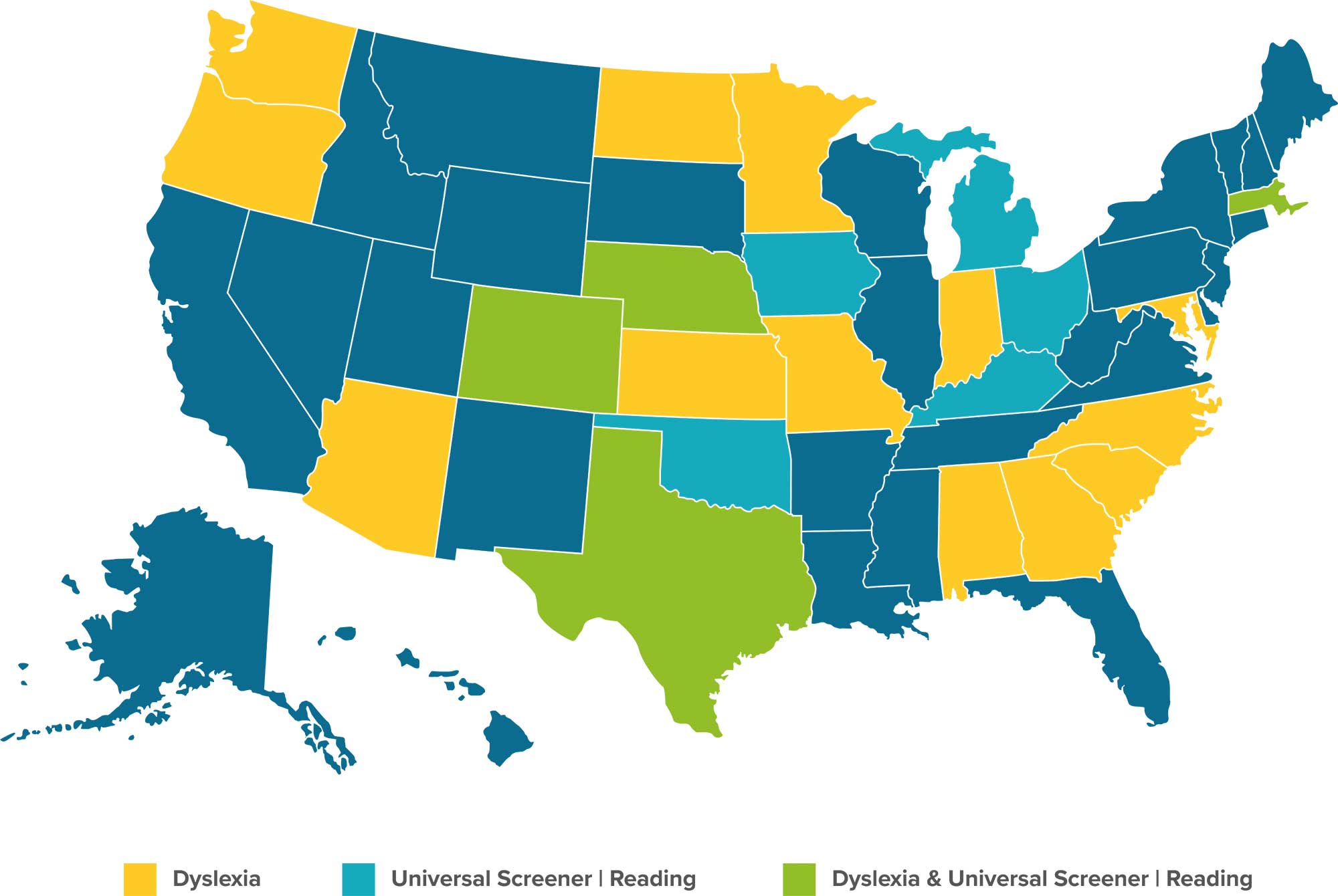
FastBridge combines Computer Adaptive Tests (CAT) and Curriculum-Based Measures (CBM) to screen students, identify skill gaps, and offer proven recommendations for reading instruction and diagnostic reading interventions. That’s why many states have approved FastBridge for early reading and/or dyslexia screening.

Learn how FastBridge helps students become proficient readers.

aReading
Assesses broad reading ability and predicts overall reading achievement in concepts of print, phonological awareness, phonics, vocabulary, comprehension, orthography, and morphology. aReading is aligned to the Lexile® Framework for Reading.
Universal Screening
Grades K-12
AUTOreading
Assesses accuracy and automaticity with phonics, spelling, and vocabulary skills.
Universal Screening & Progress Monitoring
Grades K-12
CBMreading
Assesses oral reading fluency with connected text.
Available in both English and Spanish
Universal Screening & Progress Monitoring
Grades 1-8
CBMcomp
An optional extension of CBMreading that assesses the students' ability to recall and retell information from passages of connected text.
Universal Screening & Progress Monitoring
Grades 1-8
COMPefficiency
Assesses the quality and efficiency of a student's reading comprehension.
Universal Screening & Progress Monitoring
Grades 2-8
earlyReading
Assesses early literacy skills through reading assessment subtests that measure accuracy and automaticity.
Available in both English and Spanish
Universal Screening & Progress Monitoring
Grades PreK-1

The Researchers

Dr. Ted Christ & Colleagues
FastBridge Reading Suite
Co-Founder of FastBridge, Professor of School Psychology,
University of Minnesota

Dr. Zoheb Borbora
aReading
Co-Founder of FastBridge

Dr. Scott Ardoin
earlyReading & CBMreading English
Professor of School Psychology,
University of Georgia

Dr. Tanya Eckert
aReading
Associate Professor of School Psychology,
Syracuse University

Dr. Lori Helman
earlyReading & CBMreading Spanish
Professor of Literacy Education,
University of Minnesota

Dr. Mary Jane White
FastBridge Reading Suite
Research Associate,
University of Minnesota
FastBridge offers teacher-led reading interventions to help move struggling students closer to grade-level goals. Our scripted, class-wide and small-group lesson plans make it easier for educators to teach core literacy skills by aligning directly to our diagnostic reading assessments. Each skills-based intervention is backed by the research of Dr. Ted Christ and his colleagues at the University of Minnesota.

Concepts of Print
Proficiency includes an understanding that English words are composed of letters, and sentences are composed of words.

Phonemic Awareness
Proficiency includes an understanding that there are individual sounds in words, and words can be split apart into their individual sounds.

Phonics
Proficiency includes an ability to connect speech sounds to letters and make them accessible by sight.

Fluency
Proficiency includes reading text accurately, automatically, and at a rate that allows comprehension.

Vocabulary
Proficiency includes an ability to build, store, and retrieve words and background knowledge.

Comprehension
Proficiency includes using phonemic awareness, phonics, fluency, and vocabulary to understand written words and making sense of what one reads.


Infographic

The Principles of Effective Reading Instruction
Do you know what it takes for all students to become strong readers? Learn the essentials of effective, science-based reading instruction and structured literacy instruction.
PLAYBOOK

Putting the Science of Reading into Practice
Read expert advice on why reading assessment tools that identify the five critical components of reading and instruction grounded in the science of reading are crucial to addressing inequities and ensuring all students become strong readers.
Webinar
Profile in Reading Success: How SPPS Uses Reading Assessment Tools to Guide Instruction
See how educators in Saint Paul Public Schools (MN) use diagnostic reading assessment data to implement Tier 1 evidence-based instructional practices and interventions for struggling readers.
